antiphon® mpm™

Structure-borne sound damping directly in the metal sheet

antiphon® MPM™ is a structure-borne sound damping laminate sheet that combines strength and low weight with superior vibration damping. Through an innovative sandwich construction, structure-borne noise and resonance are effectively reduced directly in the sheet – without the need for additional damping materials. antiphon® MPM™ is an excellent alternative for the automotive and energy sectors, as well as in the construction industry.
ANTIPHON® MPM™

Construction and Function

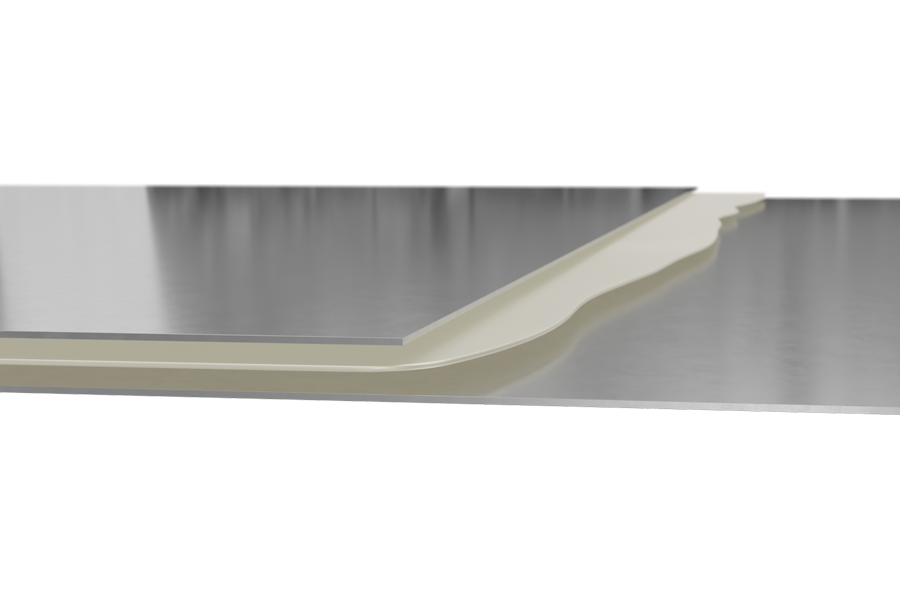
antiphon® MPM™ (Metal-Polymer-Metal) is a formable and weldable sandwich consisting of two metal sheets with an interlayer of viscoelastic material. The laminate sheets surrounding the polymer are often cold-rolled or coated steel, but in principle, all types of metals and alloys may be used.

The construction combines mechanical strength with effective vibration damping, making the material ideal for environments with high demands for both durability and efficient noise reduction. When the sheet vibrates, shear stresses arise in the polymer core. The kinetic energy is converted into heat, reducing structure-borne noise, resonance, and sheet noise.

The laminate sheets are supplied with various interlayers optimised for temperature ranges between +5°C and +125°C. antiphon® MPM™ reduces structure-borne noise and simultaneously replaces existing sheet metal. The need for other vibration-damping materials is eliminated, resulting in savings in terms of weight, space, and cost.
Areas of Application

antiphon® MPM™ is used in a variety of applications, primarily within the automotive industry but also in the construction and energy sectors. By varying the materials, thickness, and properties of the polymer core, the product is tailored to meet specific customer requirements.

Automotive Industry

High rigidity and effective sound damping result in quieter vehicles and enhanced comfort.

• Body panels and door panels
• Floor and luggage compartments
• Bonnets and inner fenders
• Roof panels and firewall bulkheads
• Machine enclosures and chassis components
• Engine and drivetrain components for vehicles with both combustion and electric engines.

Public Transport

In trains, trams, buses, and underground systems, antiphon® MPM is used to reduce vibrations and structure-borne noise from engines, tracks, and road surfaces.

• Wall and floor panels in passenger compartments
• Machine and engine rooms
• Roof panels and driver’s cabs
• Screens, enclosures, and service hatches
• Undercarriage components exposed to vibrations

Heavy Industry

Quieter operation, increased comfort, and extended equipment lifespan
• Machine enclosures and protective housings

• Ventilation and fan ducts
• Pump housings and compressors
• Control cabinets and panels
• Industrial walls and floors near noise sources

Energy

Damping of structure-borne noise and vibrations in facilities where heavy machinery generates noise.

• Turbine and generator enclosures
• Transformer and control stations
• Boiler rooms, fan and pump equipment
• Protective housings and service panels

Construction

Effective structure-borne sound insulation, improved acoustic comfort, and long-term durable constructions.

• Wall and floor panels in technical spaces
• Machine and lift shafts
• Ventilation and fan rooms
• Roof and wall constructions close to traffic or industrial areas
• Building modules and prefabricated elements with high sound requirements
ANTIPHON® MPM™

MPM – How it works

antiphon® MPM™ is an innovative sandwich construction that effectively reduces vibrations and structure-borne noise directly in the sheet metal. The sheet can be welded, deep drawn and processed just like conventional sheet metal.

antiphon® MPM™ is an excellent option for the automotive and energy sectors, as well as in areas such as public transport and construction.

Processing

antiphon® MPM™ can in most cases be processed in the same way as conventional sheet metal, which makes it easy to integrate into existing manufacturing processes. The material retains its damping function even after forming and cutting.

Cutting and punching

Carried out using standard tools or machines for sheet metal

Forming/Deep Drawing

Forming and deep drawing are entirely feasible, and the material can, with certain limitations, also be bent and further processed.

Cutting

Can be cut or laser cut depending on thickness

Welding

The polymer is affected by welding, but the impact on the surface and the material's acoustic properties is negligible.

Bonding and riveting

Recommended for assembly where welding is not suitable

Surface treatment

Can be painted or lacquered as needed